I discovered this week the amazing book
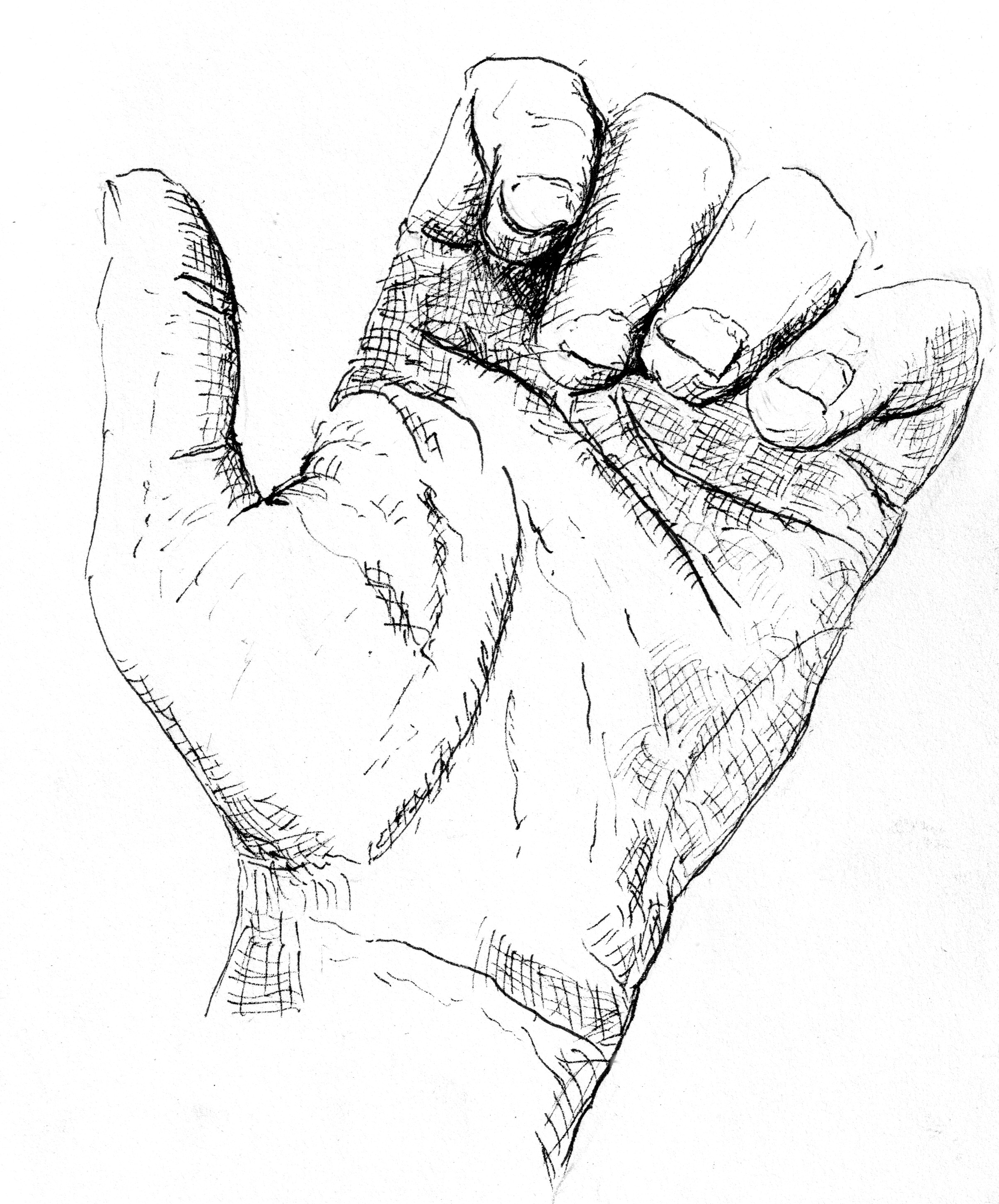
Crosshatching in Pen & Ink
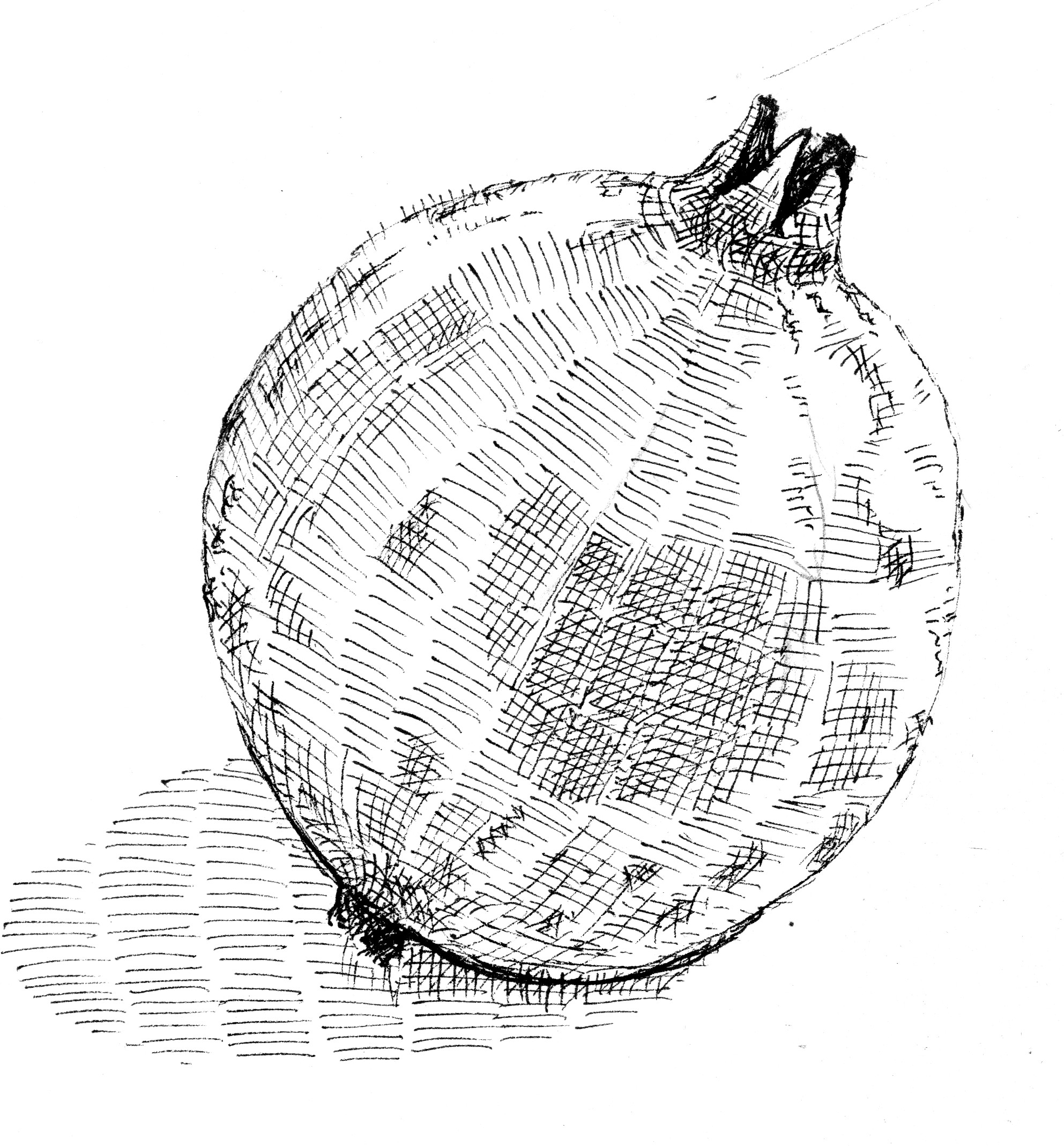
by August Lamm and I decided to study cross-hatching.
Here is my fist drawings, a pomegranate and my left hand:
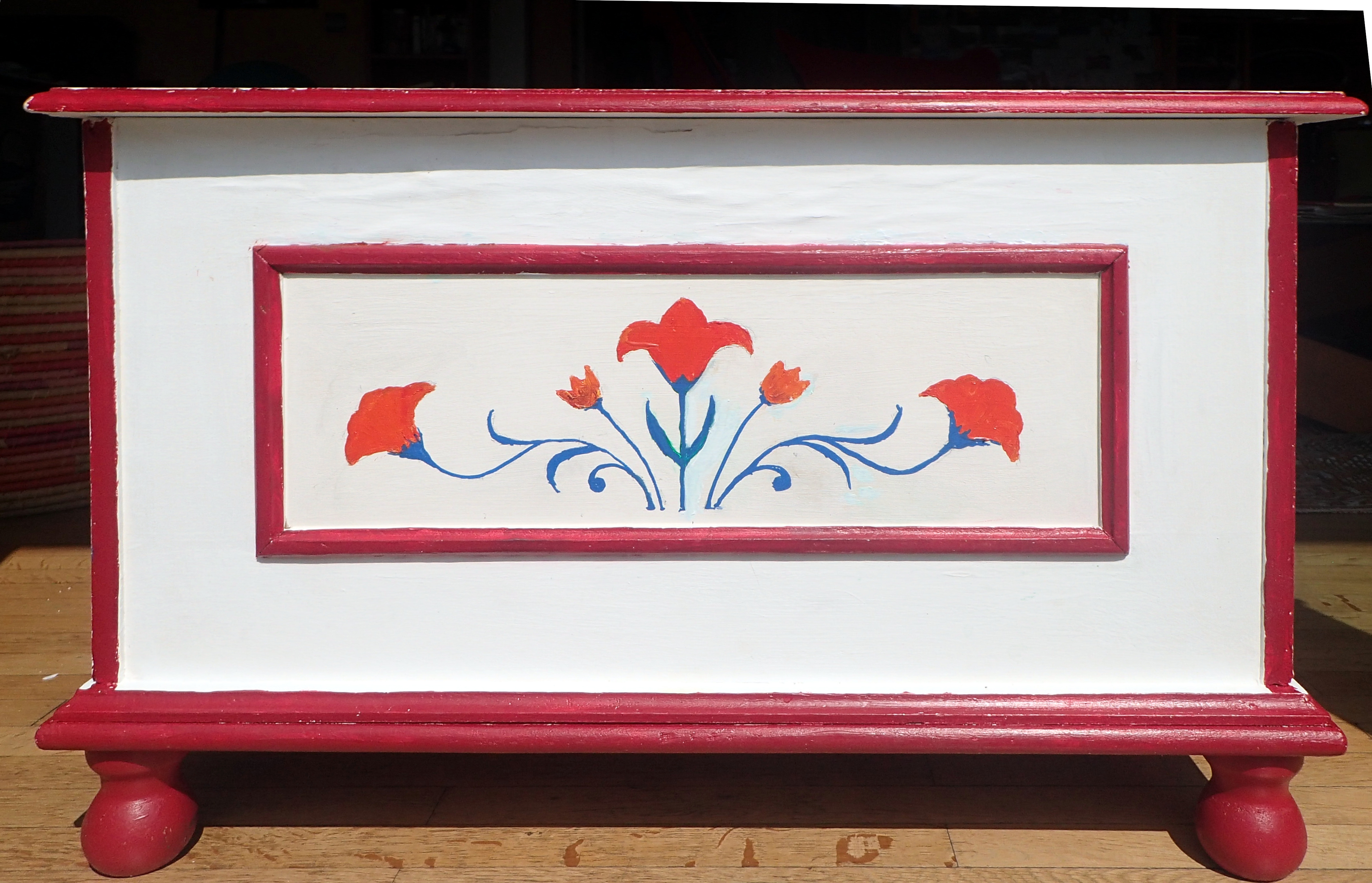
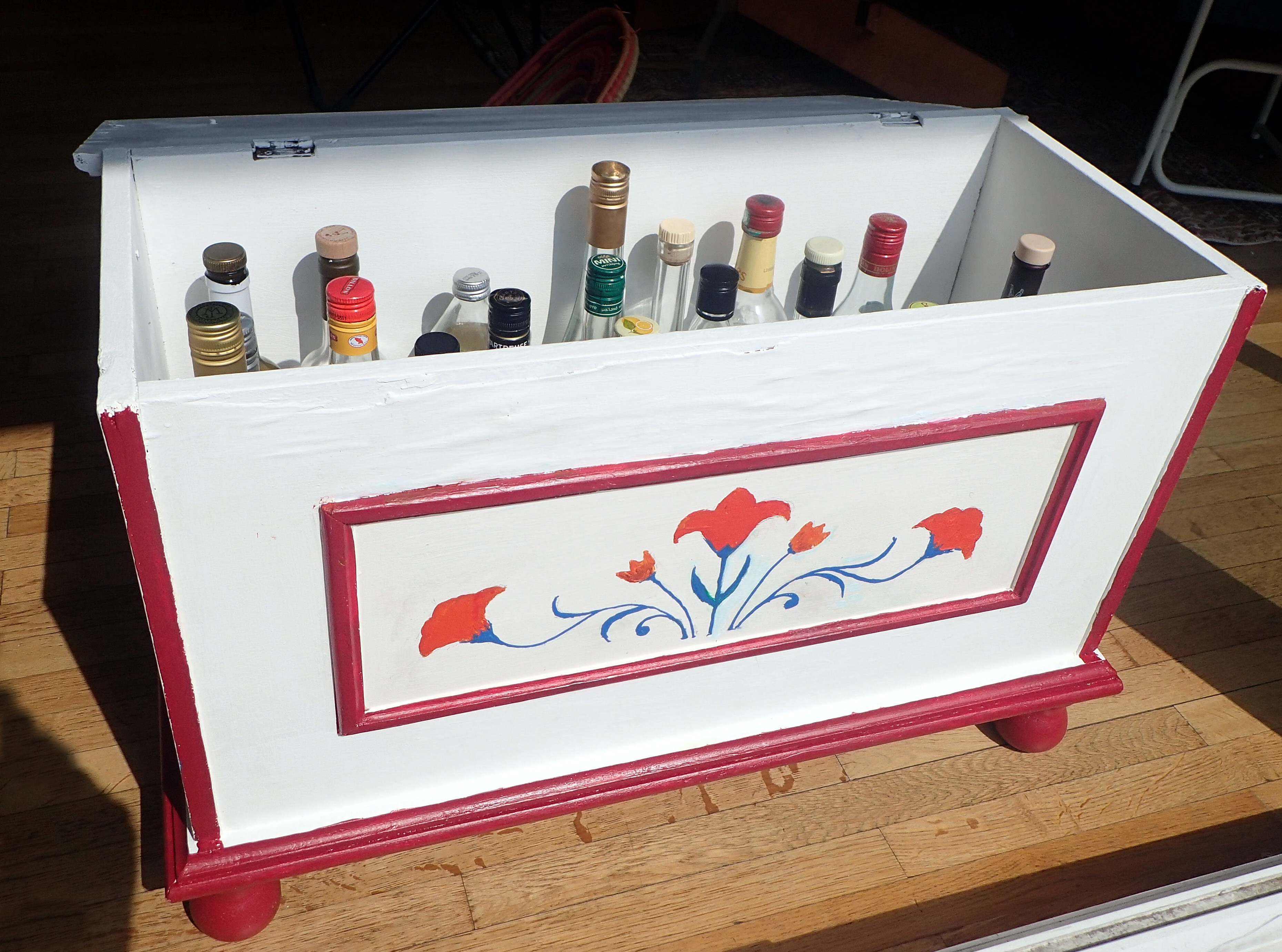
My wife recovered and restored an old safe in bad condition. After painting and cleaning, it looked better. I painted some acrylic flowers in the decorative style of Alsatian furniture.
To mix my acrylic colors as I want,
I must have a basic and well balanced set of pigments,
and I must know what will happen when I mix them together.
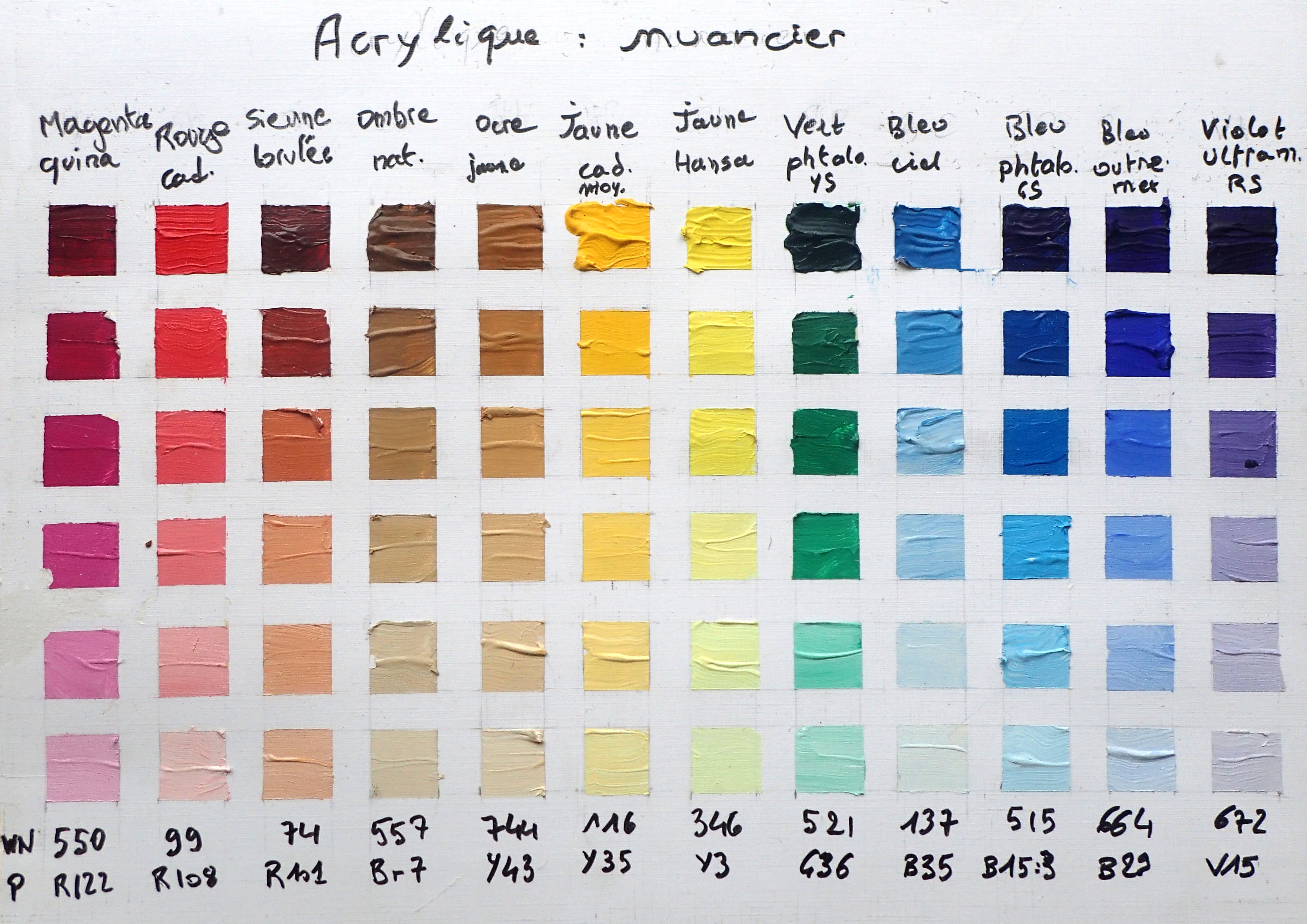
So, during a long weekend, I decided to paint a color-chart
for better understanding and mastering colors.
I first defined my palette with twelve colors:
name
pigment
winsor-newton
magenta quinacridone
PR122
550
red cadium
PR108
99
sienne brunt
PR101
74
Umber raw
PBr7
557
Ocre
PY43
744
yellow cadium medium
PY35
116
yellow Hansa
PY3
346
green phthalo
PG36
521
blue cerulean
PB35
137
blue phthalo
PB15:3
515
blue ultramarine
PB29
664
In the second column, I indicated the official pigment symbol.
The number in the last column is the index in the Winsor Newton acrylic catalog.
I then started my first color-chart:
I followed the book Alla prima by Richard Schmid, page 130.
Note that this book is now feely available for downloading
In each column of the color-chart, I first used each color
as it came from the rube, and then lightened by adding some
titanium white.
I first observed that there was redundancies in my first palette:
the cerulean blue is very close to the …
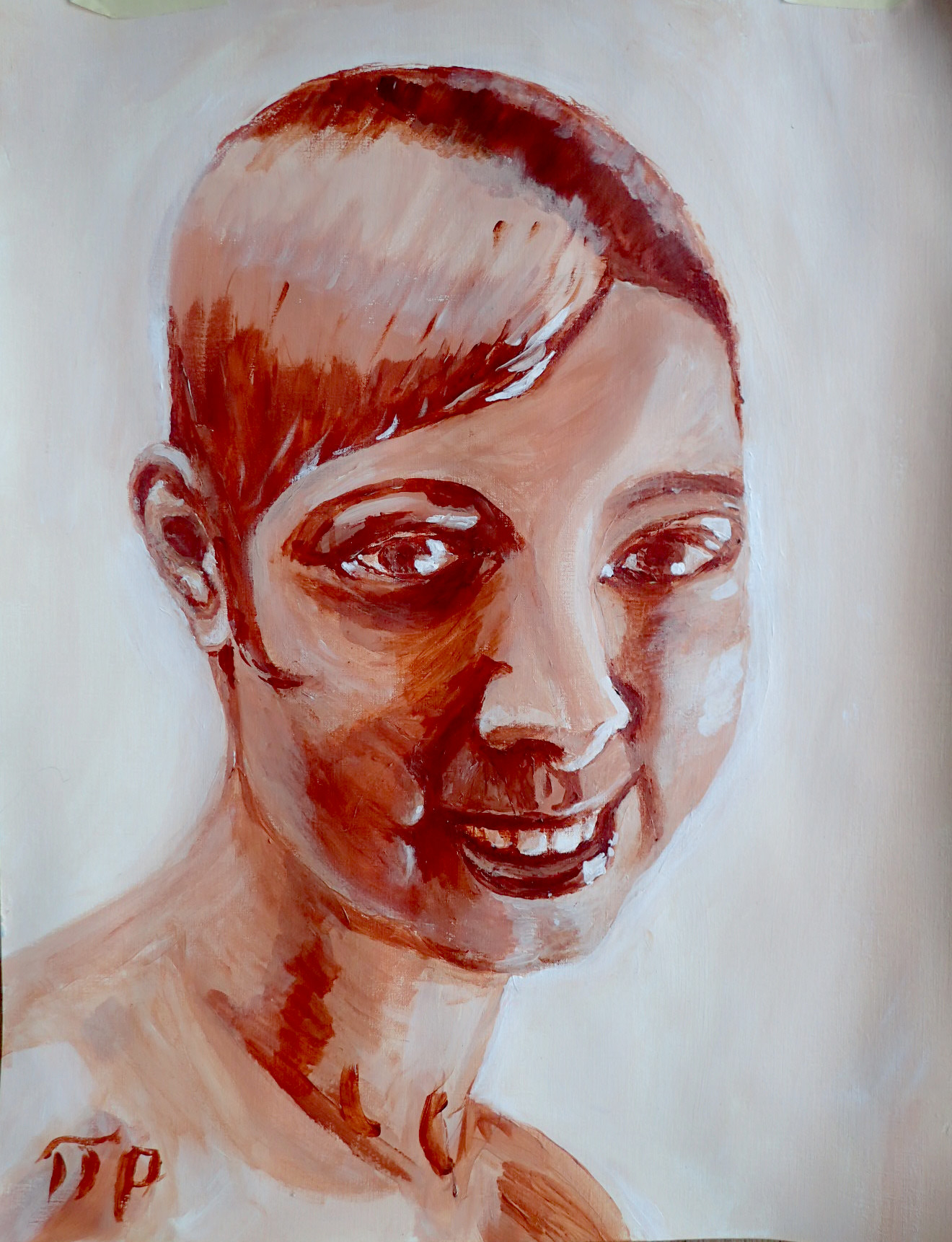
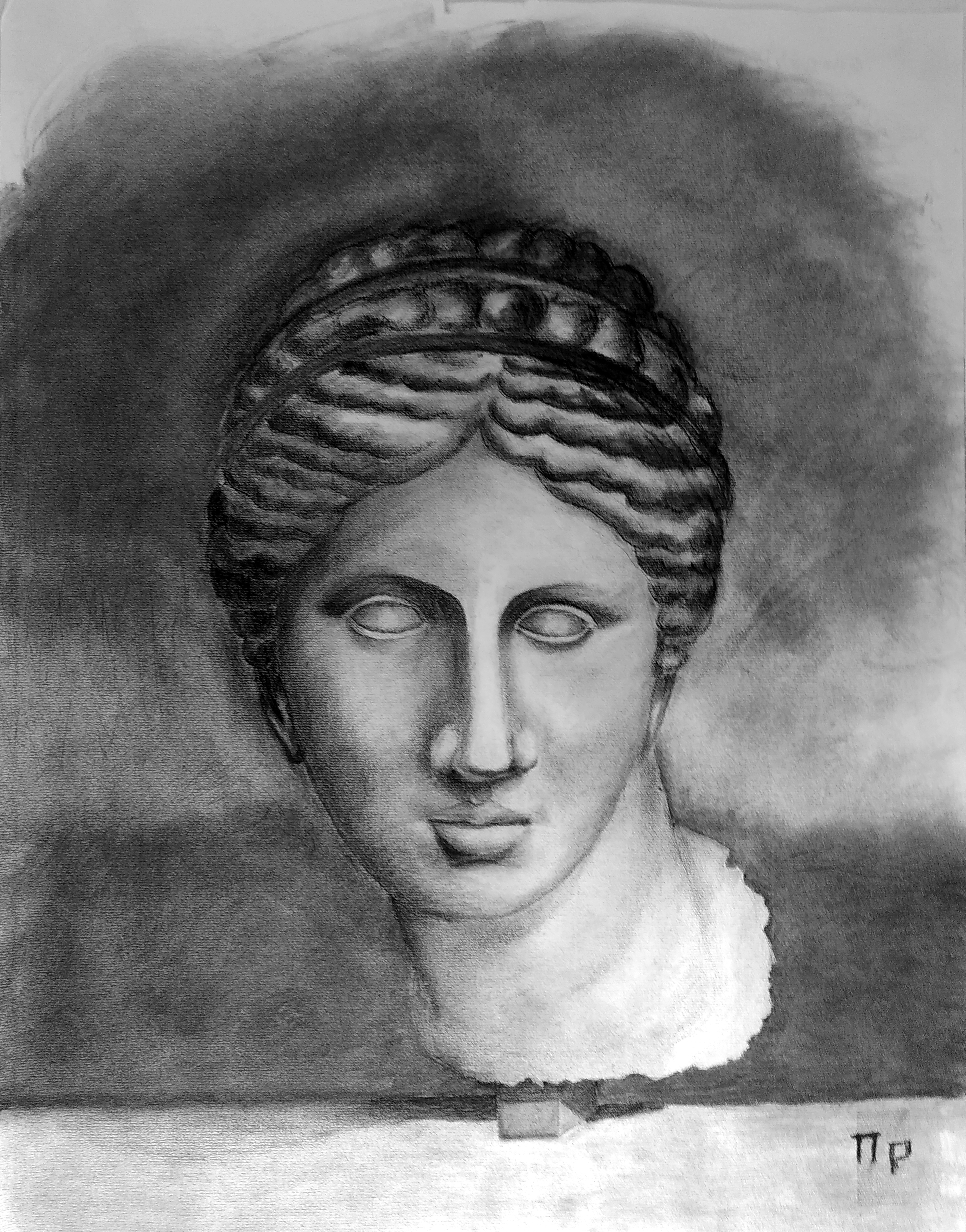
I started to study charcoal portraits
with the head of the Aphrodite of Cnide , known as head Kaufmann:
I observed the original sculpture in the Louvre museum in Paris
and then worked with charcoals from a reference photography.
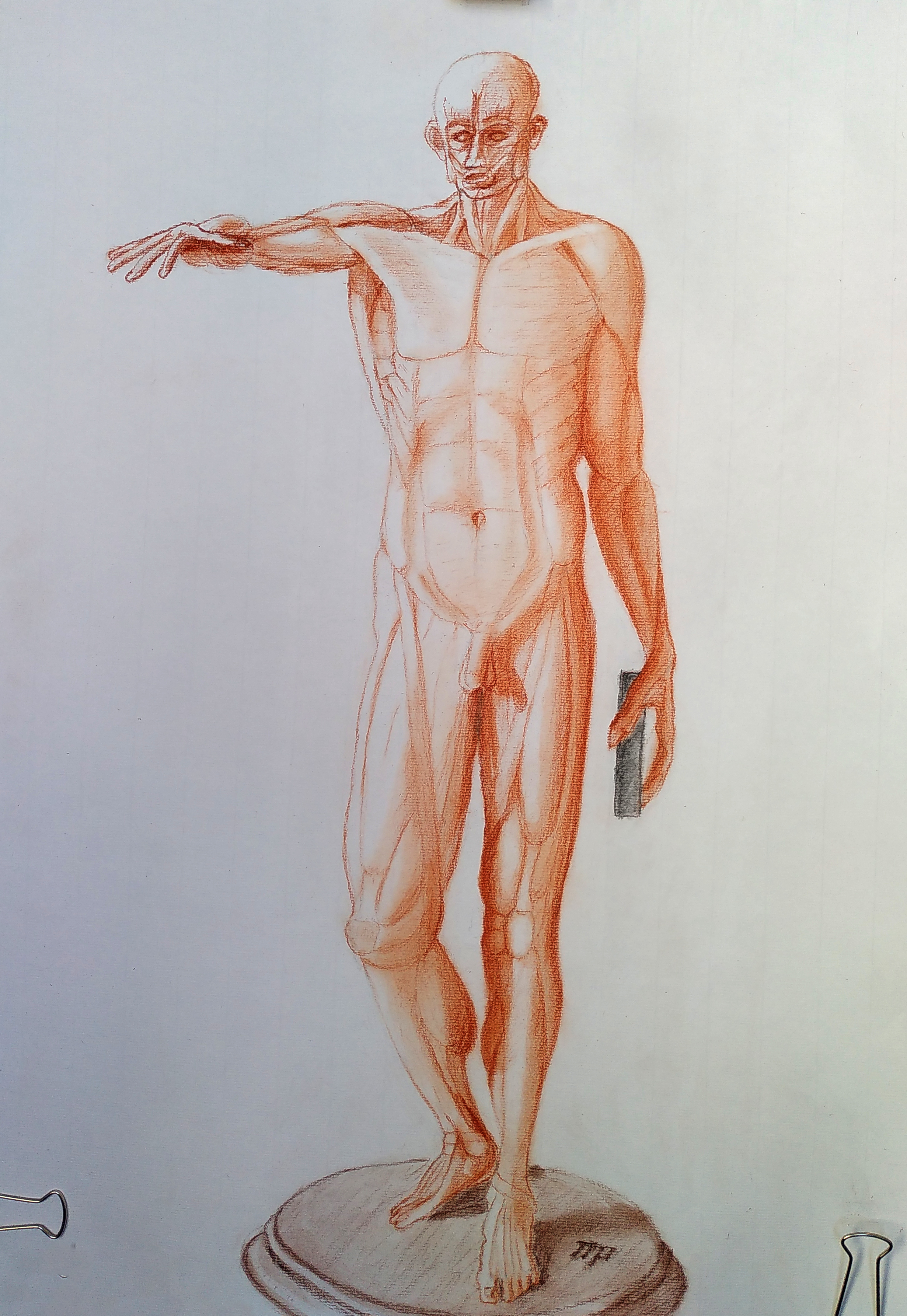
I then turned to morphology, with the Écorché de Houdon,
which is conserved at Villa Médicis, in the French academy in Rome.
I founded references in volume 15 of the excellent encyclopedia
Peindre et dessiner edited by Larousse in 1995:
it just got an used version of the complete collection, with 120 volumes
and 30 videos for 50 euros.
Finally, I got a a 3D printing of it in resin of about 40cm high.
Here is the result:
I used sanguine and some color pastel pencils.
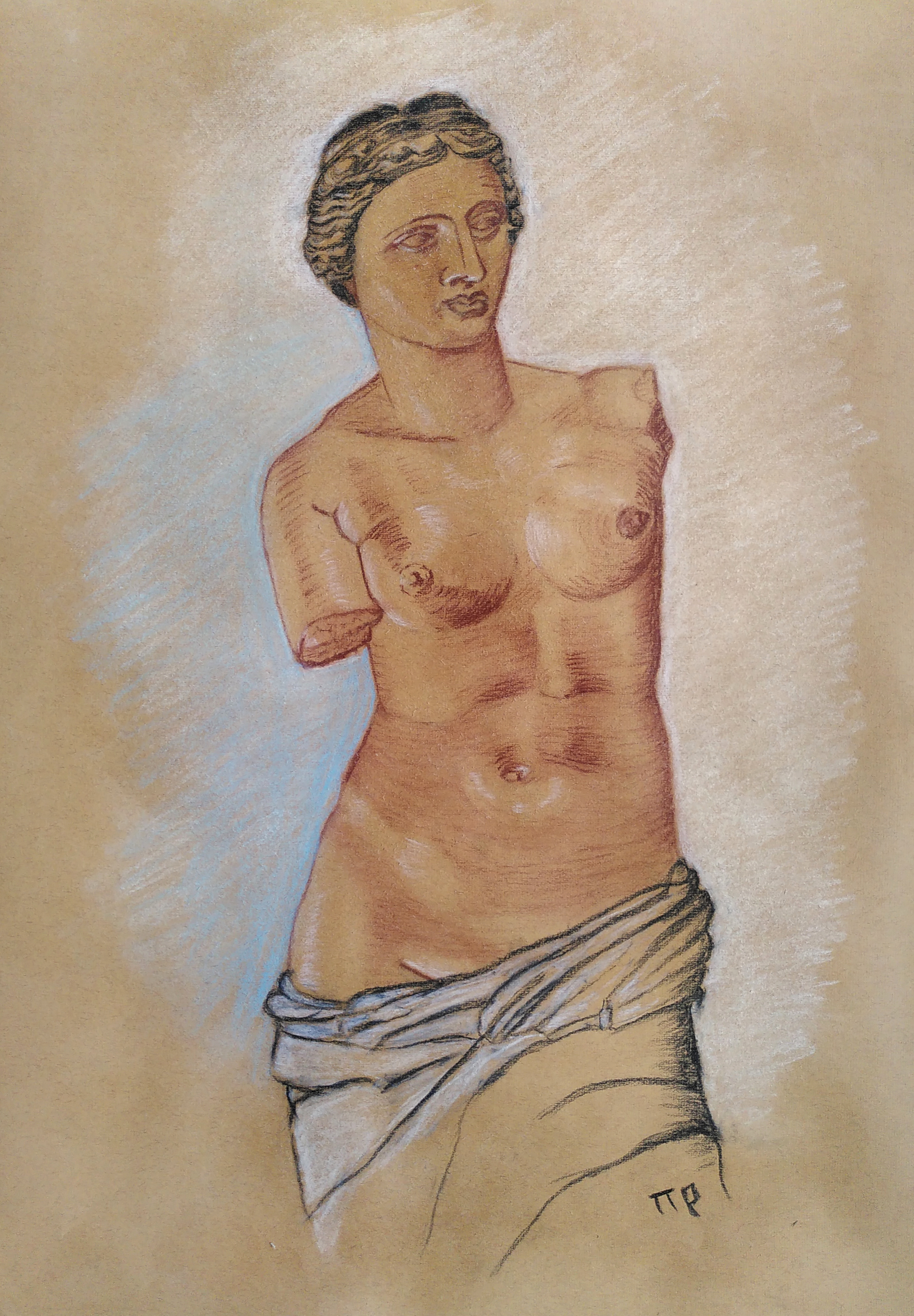
I then switched to the Vénus de Milo,
that I also observed in the Louvre museum in Paris.
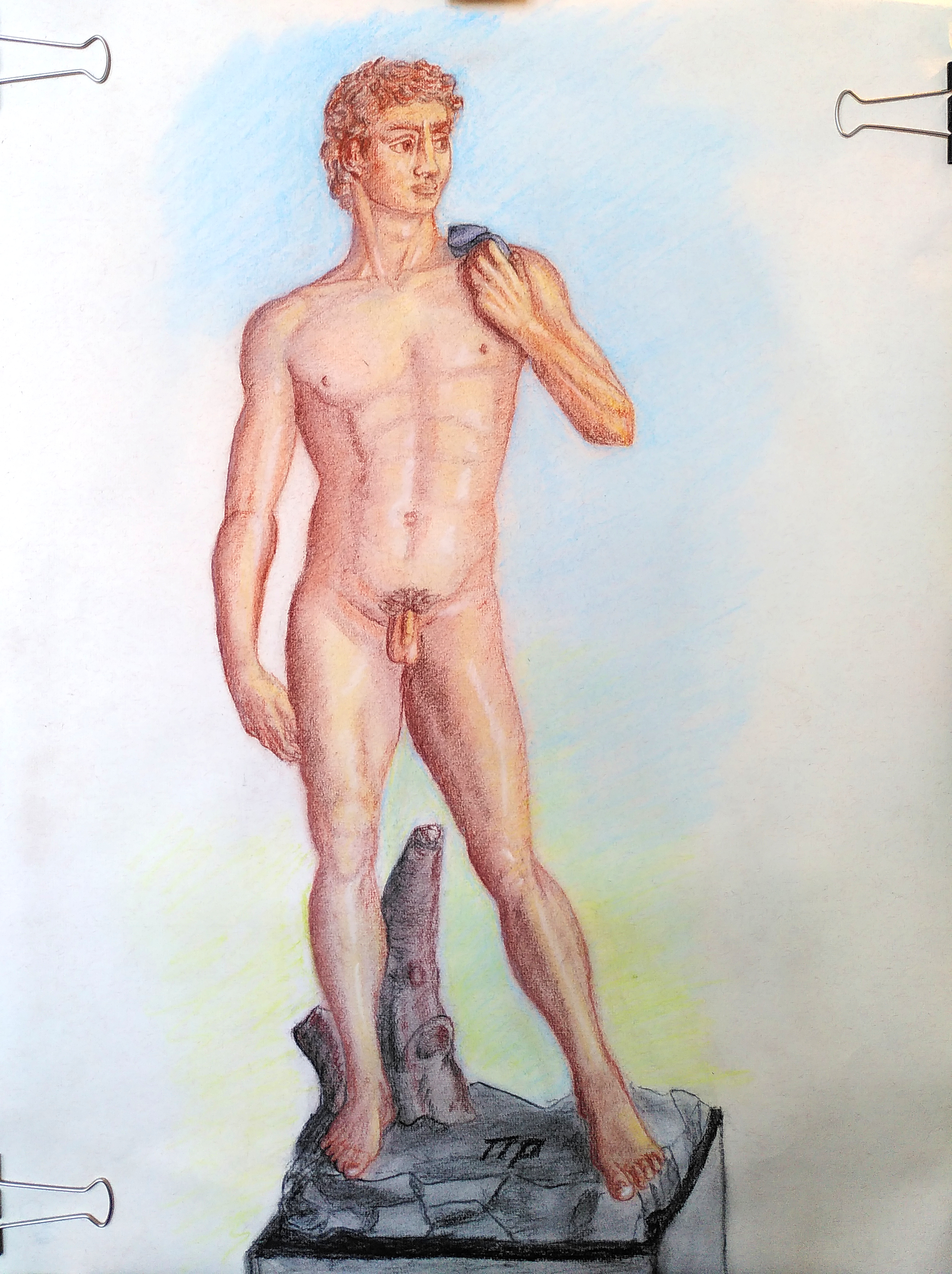
Finally, I drew the David by Micheangelo
which is exposed in the Galleria dell'Accademia in Florence
while a copy is still in the street, in front of the palazzo Vecchio.
I founded a free 3D computer's model of it in
the amazing wikimedia project.